Storm Damage Cleanup in Mountain Home, AR
When an ice storm or a spring squall drops a tree on your roof or across the driveway, our storm damage cleanup crew in Mountain Home, AR removes it safely for homeowners and property owners, clears the debris, and gets you back in and out of your place.
Call for a free estimate: (870) 706-3112Ask for a free estimate
Give us a name and a phone number. Anything else you add helps us show up with the right gear.
- Flat upfront pricing
- Insured
- Free estimates
- We sweep up before we leave
What should you do first after a tree comes down?
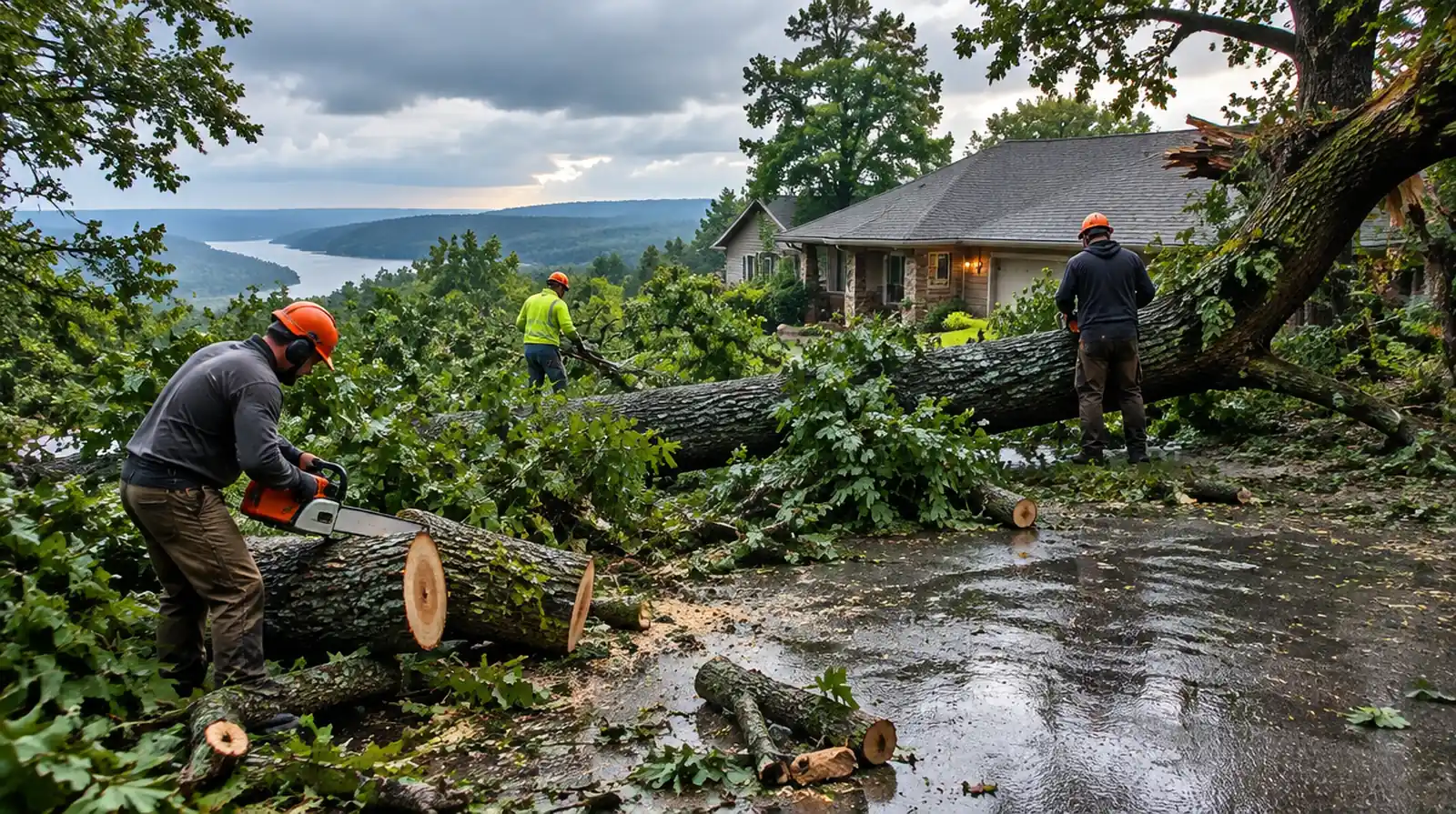
- Get everyone away from the tree and out of any room it's touching.
- Stay far away from any wire in the tree or on the ground. Treat every line as live and call the electric co-op or utility.
- Take photos from several angles before anything is moved. Your insurance company will want them.
- Call us. We'll set a time and tell you what to expect.
Why is storm work more dangerous than normal tree work?
A fallen tree is loaded like a spring. Trunks pinned under other trunks, limbs bent against a roof, and tipped trees still attached to a torn root plate can all snap or roll the second a cut is made. Around here so many trees tip instead of snapping, because of the shallow roots in rocky soil, that this is the normal kind of storm job.
We read where the tension is before we cut, and use ropes, rigging and sometimes a crane to take weight off the house in a controlled way.
What causes most storm damage here?
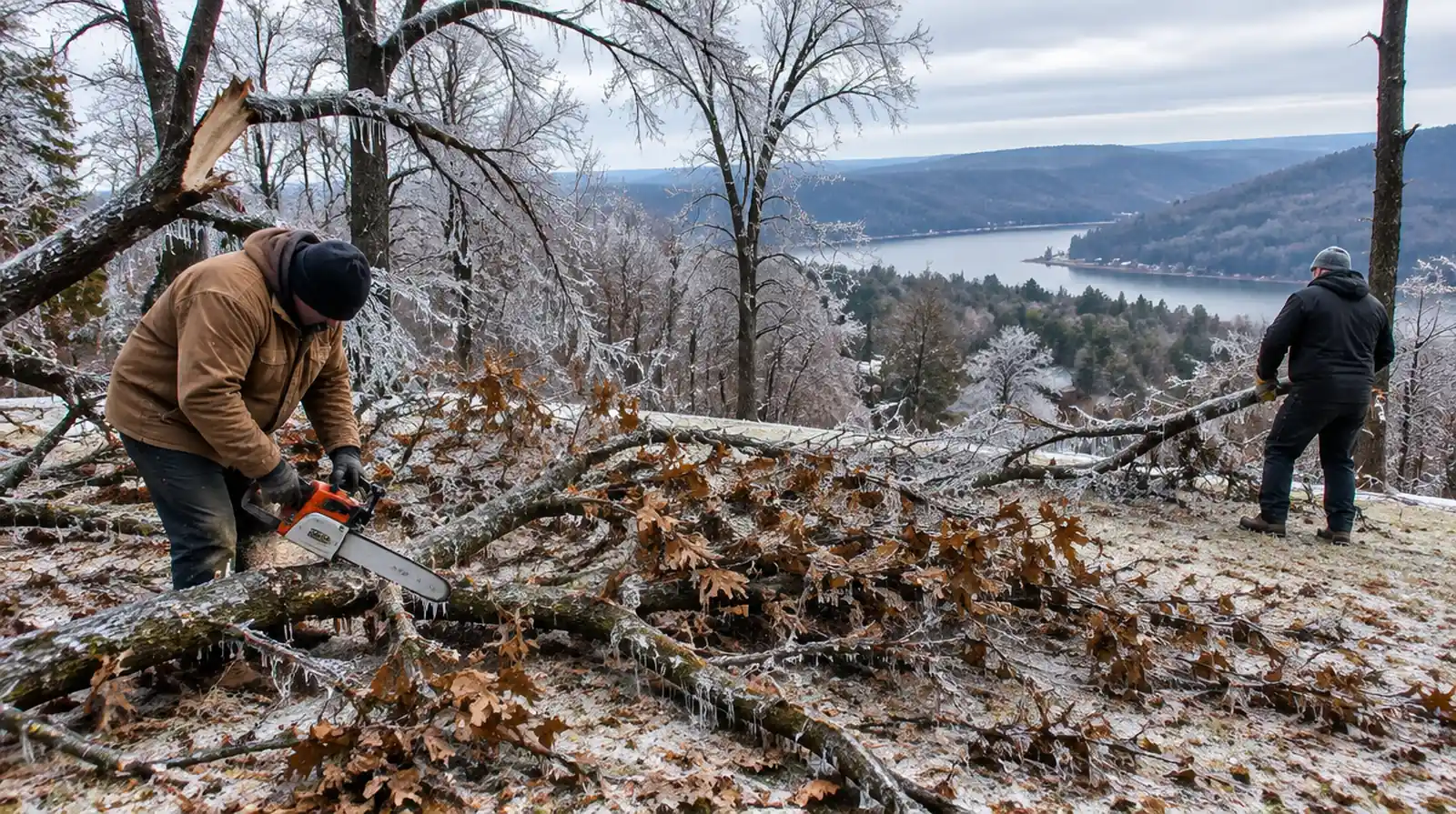
Two kinds of weather. In winter it's ice, which bends and snaps limbs and splits Bradford pears and silver maples. In spring and early summer it's thunderstorms with straight-line winds that push over trees standing in soaked ground. Trees with dead tops from oak decline tend to break first.
Handling insurance after a storm
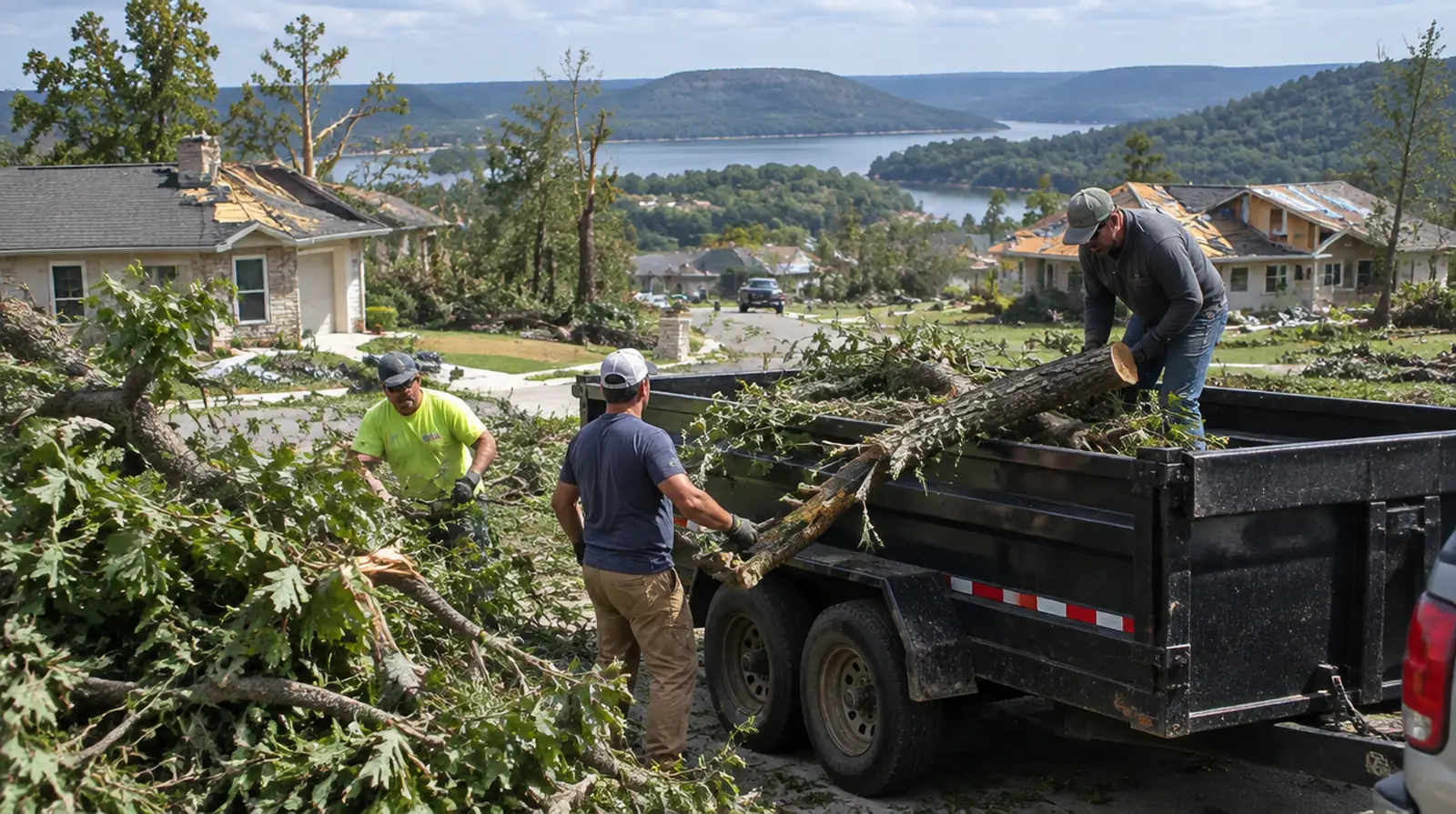
Most homeowner policies help pay to remove a tree that hit an insured structure, like the house or a garage. A tree that fell in the yard and hit nothing usually isn't covered. We give you a written, itemized invoice and photos of the job, which is what adjusters ask for.
What goes into the cost of storm work?
How the tree is lying, what it's resting on, how much rigging is needed, and whether a crane has to come in. A tree across a driveway is fairly simple. A big oak lying on a roof with limbs through the attic is a much bigger job. We'll give you a price before we start, even after a storm.
Can storm-damaged trees be saved?
Trees that lost a few limbs often recover with a clean-up trim. Trees that are split down the trunk, have lost most of the crown, or lean with lifted roots should come down. Sometimes a split trunk can be held with cabling and bracing, if the tree is healthy and the split is caught early.
Clearing debris without making things worse
After a storm, the instinct is to get everything cleaned up fast. A good cleanup, though, goes in a set order. First, anything resting on the house, a vehicle or a power line gets evaluated, because those pieces are under load and can shift. Next come hangers: broken limbs still caught in the canopy that can drop without warning. Only after those are handled do we cut up the wood on the ground, chip the brush and haul off whatever you don't want to keep.
We also look at what's left standing. A tree that lost a big leader may have a fresh wound that will decay, or a crack running down the trunk that isn't obvious from the yard. Sometimes the right move is careful trimming to rebalance the crown. Sometimes the tree is too damaged to keep and should come down before the next storm does it for you.
Ice versus wind damage
The two kinds of storms north Arkansas sees leave different messes. Ice loads every branch at once, so damage is spread throughout the canopy: lots of broken tops and snapped limbs, often on many trees in the same yard. Wind tends to take out whole trees, especially in wet spring soil where shallow roots over rock let go. Uprooted trees also leave a root plate and a hole that need attention, and our stump grinding crew can deal with what's left.
Before the next storm
Many storm calls involve trees that showed warning signs for years: dead limbs, a lean that got worse, or mushrooms at the base. Having trees looked at during calm weather lets you deal with the risky ones on your own schedule.
Questions people ask us
How quickly can you get here after a storm?
We work through the list as fast as we can, and trees on homes or blocking the only way out go first. Call early so you're on the list.
Can you put a tarp on the roof?
We can lay a temporary tarp over the hole after the tree is off, to keep rain out until your roofer gets there.
Should I cut it myself?
Not if it's on a structure or tangled with other trees or wires. Small limbs in the yard are fine to clean up yourself.
Tree down after the storm?
Call us with the address and what the tree is resting on. We'll tell you when we can get there and what it will take.
Call (870) 706-3112